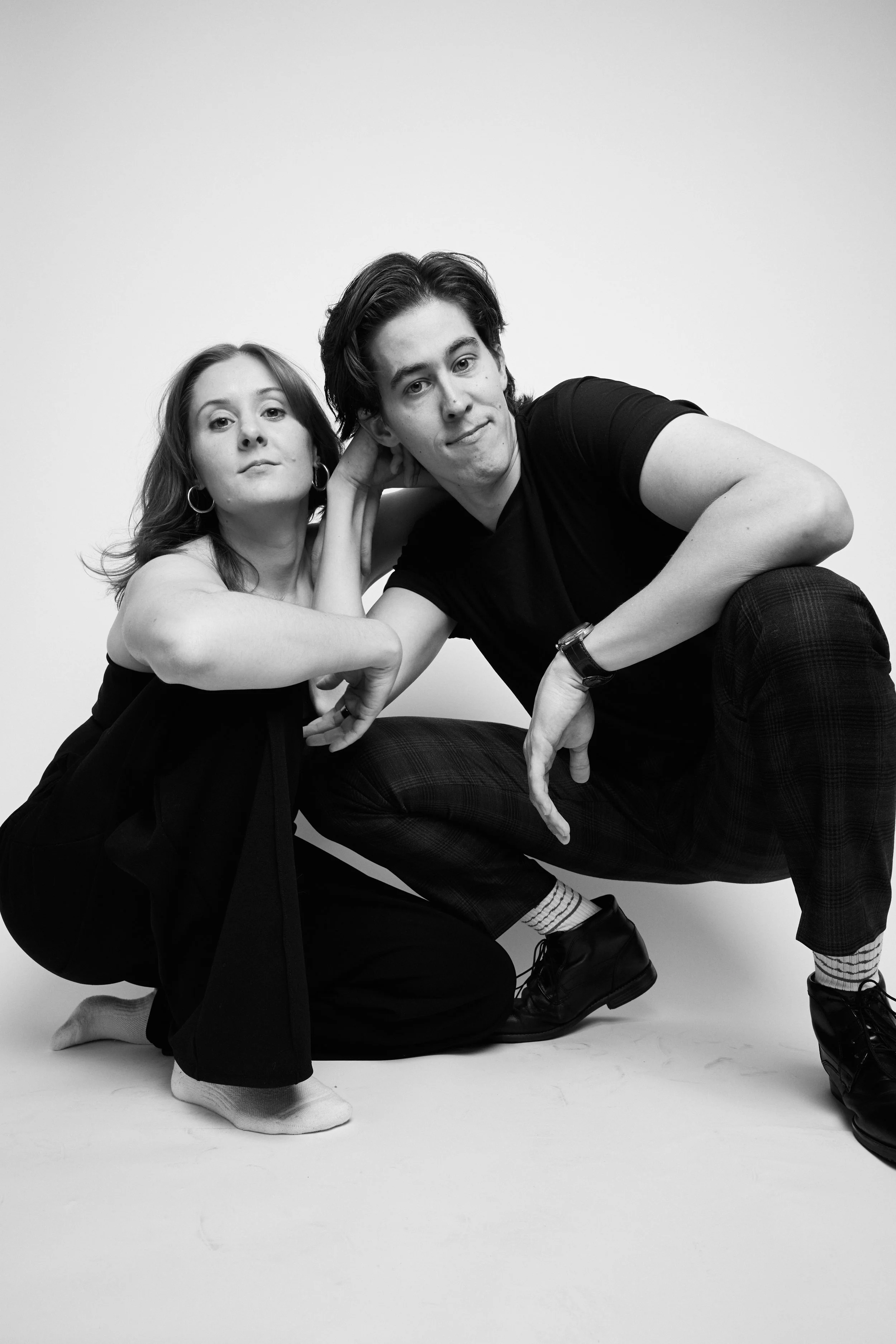
Hannah Beebe & Louis Reyes McWilliams Want You to Pay Attention
In 2024, Louis Reyes McWilliams sent an email to Hannah Beebe reading: “I’m attaching a couple plays! One’s about sex and one’s about aliens.”
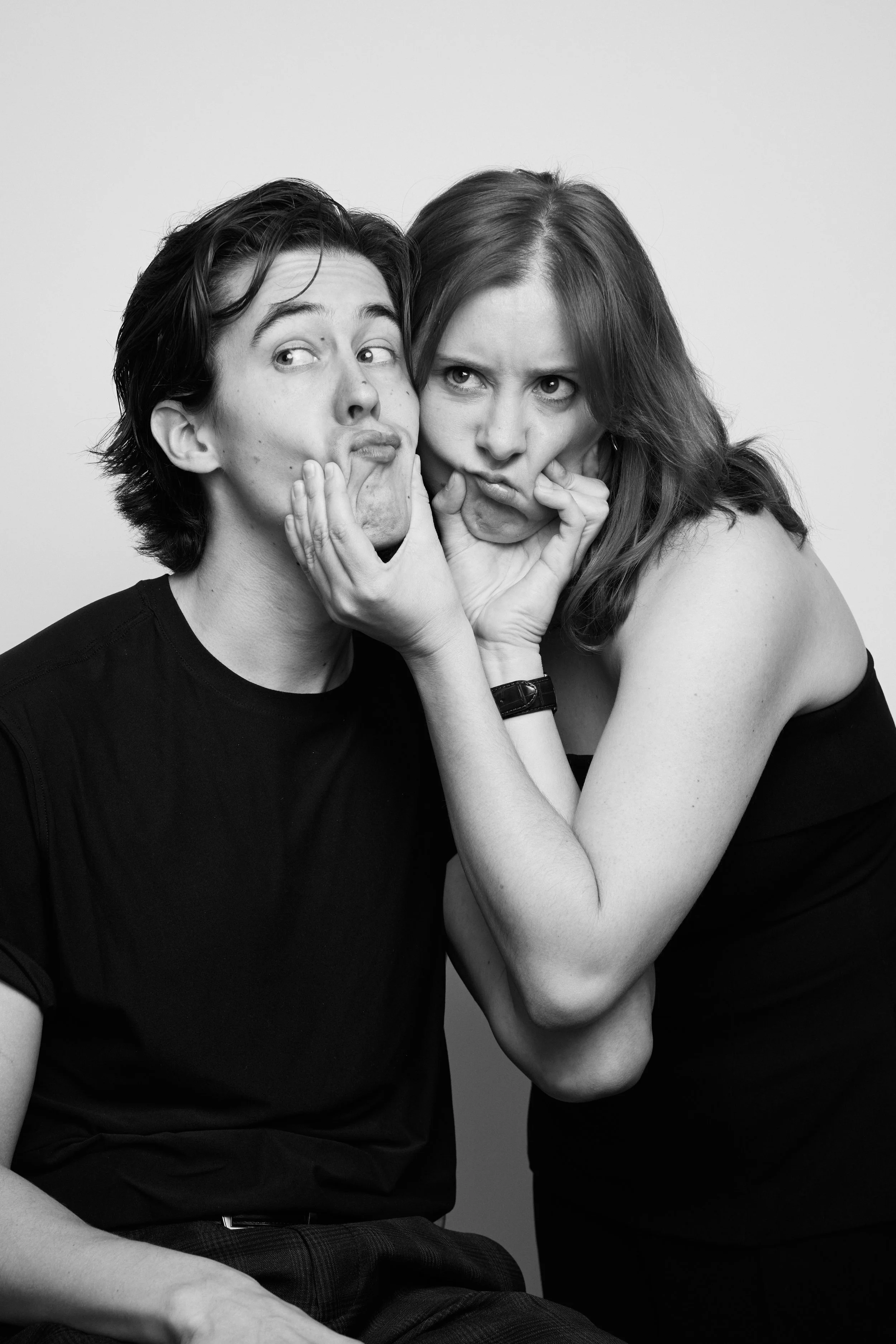
Two years later, Hannah and Louis, the equally charming and sardonic co-stars of Louis’ new romantic comedy about sex (not aliens), sit down for a chat in anticipation of the Los Angeles premiere production of How to Have Sex Again. They discuss all things freaky, sweaty, and meaningful about their processes, characters, and the work ahead.
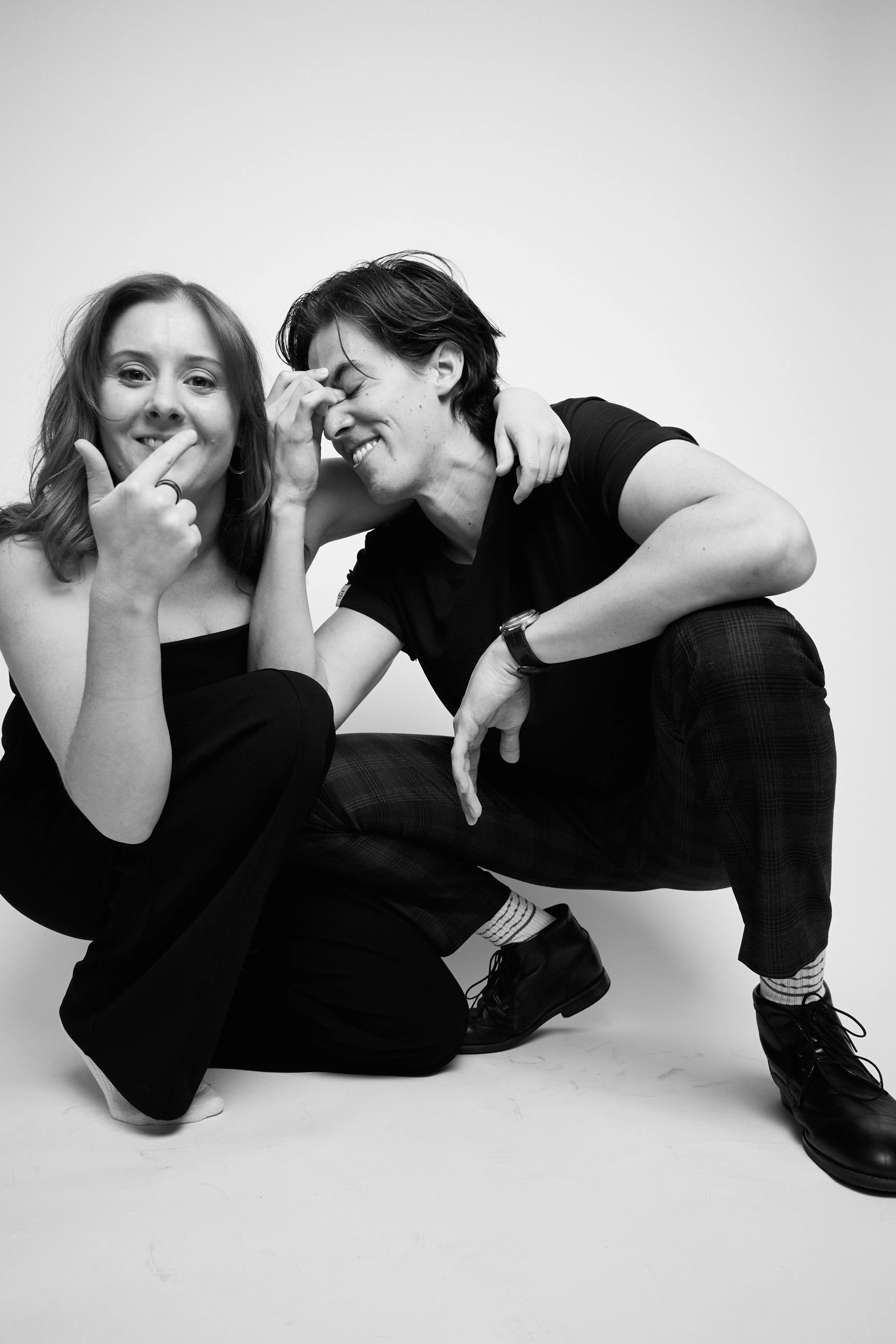
Photos: Kevin Pershin
LOUIS: Wow, we're started. We're in.
HANNAH: We’re in.
LOUIS: Here we are.
HANNAH: All of a sudden I feel weird.
LOUIS: Well, you should because we are being recorded, so that is not like all of our other conversations.
HANNAH: Right, right. I feel like we're on a podcast or something. You know how people are like, “Are we starting? Have you started yet?”
LOUIS: Right. I mean, we are in a way. I don't think anyone should give us a podcast. No one's giving us a podcast, to be clear, but I don't think we should take the initiative to start a podcast.
HANNAH: No, it's not in my interest at all. In fact, I never feel that impulse. The idea that anybody would read this or give a shit at all is like sending me into psychosis. God, it's so embarrassing. This is so embarrassing.
LOUIS: Okay, is this a good time to say this wasn't our idea?
HANNAH: I'm like, “Oh my God, what if we don't get the quote? What if we don't get it?”
LOUIS: Well, we've got a bunch already. So don't you fret.
HANNAH: Yeah. Okay, I can ask you a question. My biggest question for you is, you know you're acting in your own play. How does that feel?
LOUIS: I've been asked this by people before and it always kind of surprises me because it's not really something that I think about a lot. I feel pretty good at compartmentalizing those brains. I'm able to shut off the writer part of it and just be like, great, as an actor, what's going on in this scene? I'm not thinking as a writer when I'm talking to you. The writing work that I've done functions almost like my prep work as an actor. It's not dissimilar from going and writing a backstory or getting into the granular stuff of who this person is. This is so earnest, but I love the work of acting so much. And because I wrote it, I really hear the rhythms of it, which is often how I'm getting into a role as an actor.
HANNAH: Yeah, that makes sense.That's the last question on process we'll ask. Nobody wants to hear us talk about process.
LOUIS Great, good. If you survived that, then great. I will also add too– and this is really not me sucking up at all– but having a good scene partner in you. You're surprising me all the time with the way that you're embodying the role. So that helps me get out of writer-brain and into like, “Well, I just have to respond to that as an actor and be present with you.”
HANNAH: Oh, that's good. People ask me, “What is it like to work with the playwright in the scene?” There are moments where I don't think of you as the playwright. And then I'm sort of like, “Oh, he did write this.” People are like, “Is that weird?” I'm like, “No.”
LOUIS: That would be my nightmare if you were sitting across from me in a scene and all you were thinking about was like, “Wow, he did write that.” Like, that'd be horrible.
HANNAH: I definitely don't think that. You surprise me when we're working, you know, I find you very easy to act with, so it doesn't feel like the playwrights in the room. Like, I forget.
LOUIS: I like that I have some skin in the game. And it's not about, are we doing the playwrights’ work justice or what are they going to think? I'm in there trying to help us make it work too. I'm involved in it in a live way.
HANNAH: Yeah. Cool.
LOUIS: Well, I have a question for you.
HANNAH: Please.
LOUIS: I'm curious about, obviously, well, I hope, obviously this is a comedy.
HANNAH: Up for debate.
LOUIS. Just while we're talking about my nightmares, one of them is that no one's laughing at this play. Because I know you and how much you love comedy, and it's a big part of what you do, I'm curious if there's anything from that world, and from that mode of working that you bring to this play? If there's anything about the process that is the same or that changes?
HANNAH: I feel like I didn't really learn what listening was until I did improv. And I spent four years of drama school being like, “Am I listening?” And no, I wasn't actually listening. So I feel like it has loosened me up a little bit. It doesn't feel like I'm muscling through it. It’s made it easier. Also, there's no wrong choices in improv. And taking that into scripted work it's like, just do it. Just try it. Because you have the guardrails of what's on the page and who this person is. I don't have to create a person out of nowhere. So now I can sort of figure out how to play within the guardrails. And I didn’t learn how to do that until I did improv when you're faced on stage with somebody, and they are saying something that you're like, “That is not at all what I thought you were going to say.” And you got to figure out a way to make it work.
LOUIS: Having also gone to school for acting, I certainly can get so caught up in technique, and what can get lost sometimes is that it's all in service of making something that feels present. There's something great about improv, where it's like, “This has to be alive and in the moment.” And that doesn't mean that it's always good. There's plenty of bad improv.
HANNAH: It often isn't good, you know? Actually, to speak to the comedy of it. I mean, like, the play is really funny. Yeah, write that down.
LOUIS: We hope. Knock on wood.
HANNAH: The play is really funny. I think it's really funny because these people talk the way that everybody else talks, you know? So they have this natural rhythm of like the way that people are sort of hilarious just from being themselves. Also from doing all this comedy, I can tell this is a joke or this isn't a joke. You know, it makes it easier to discern what is on the paper and stuff like that.
LOUIS: Right.
HANNAH: Um, I don't know why I said all of this. I'm feeling like Robert Pattinson.
LOUIS: Isn't he the one that came prepared with questions?
HANNAH: He's the one who's like, “I can't find the email with all the questions.”
LOUIS: In fairness, I do think that's correct casting for us. I think you're Robert Pattinson. And I'm Zendaya, a hundred percent.
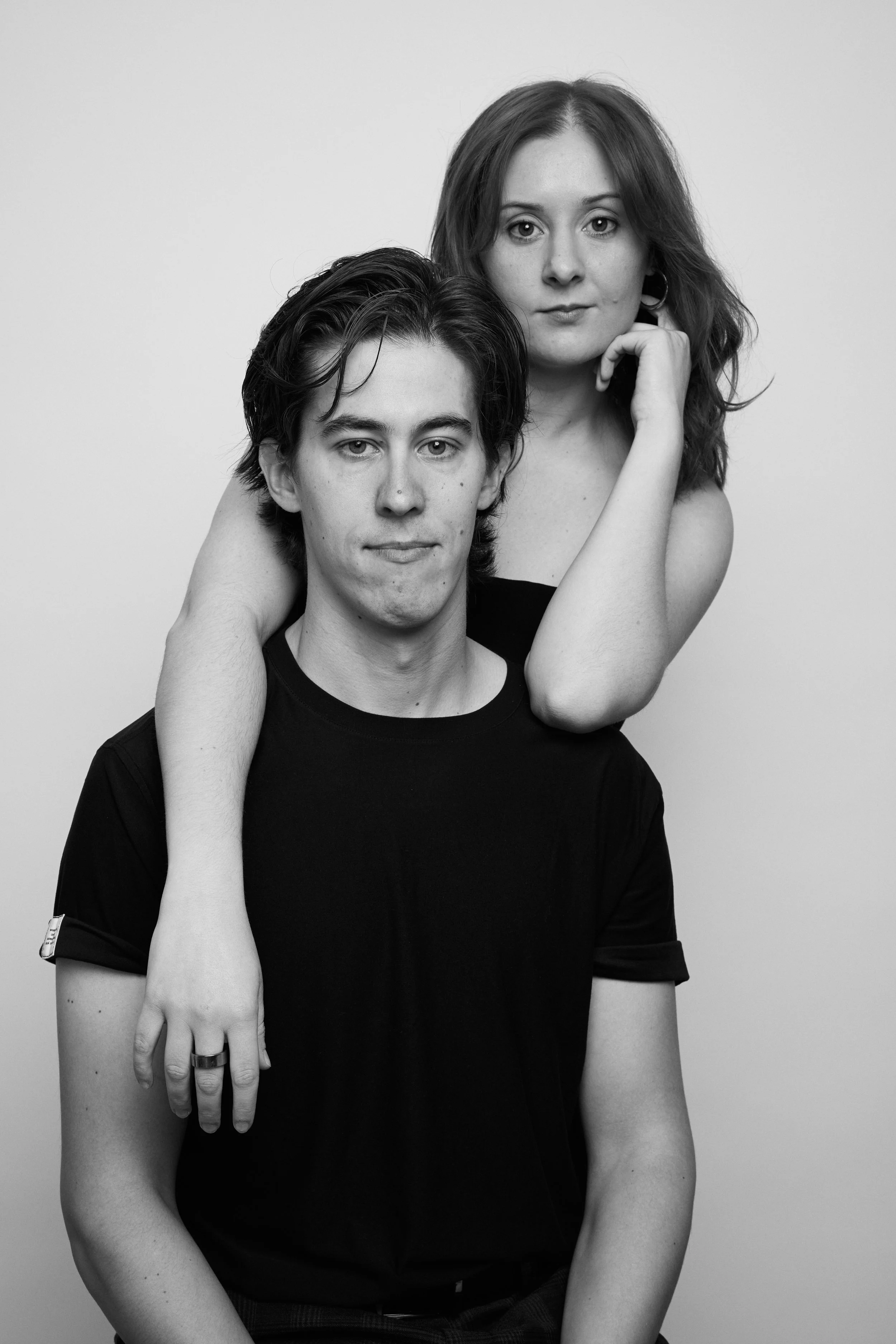
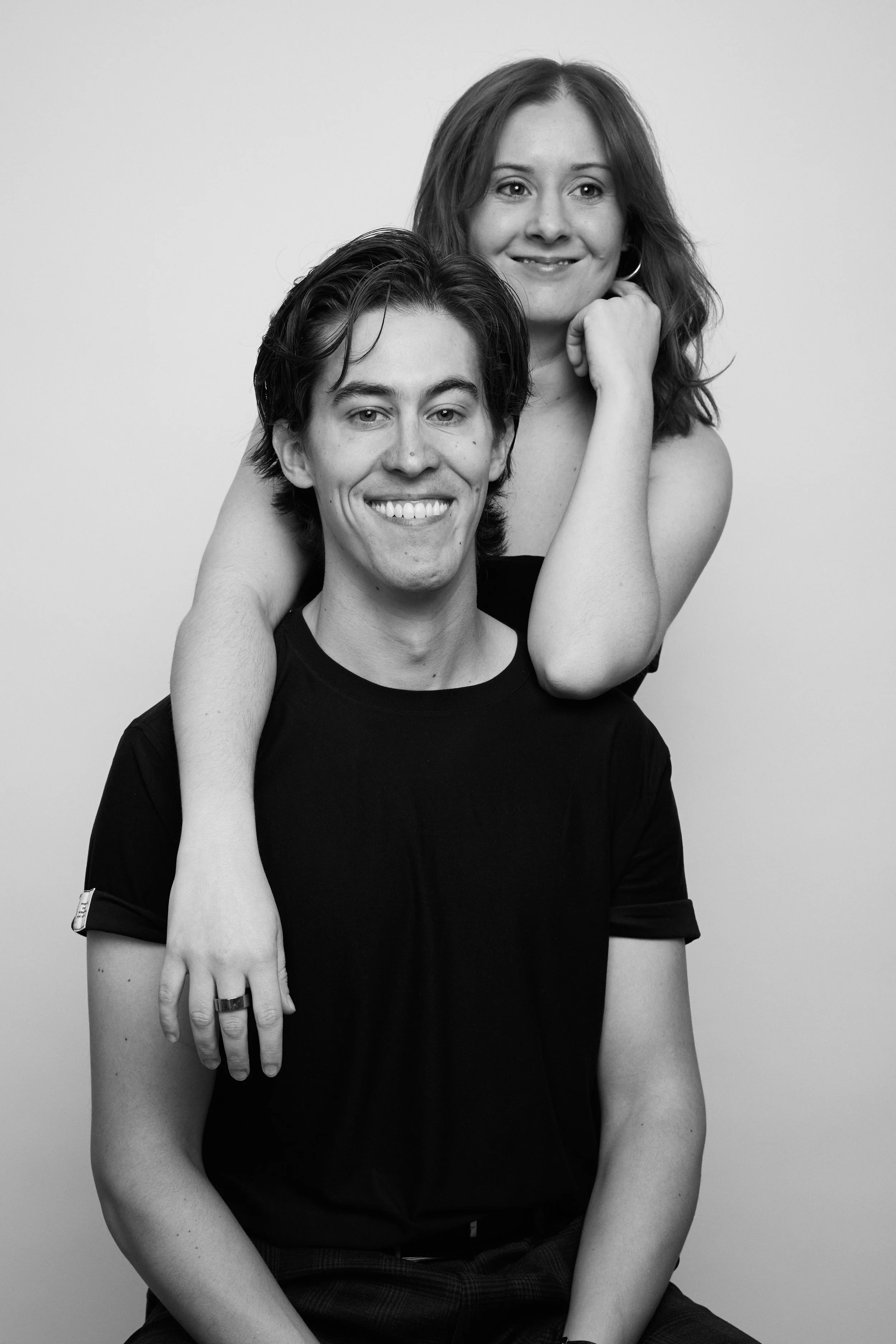
HANNAH: Yeah. That feels deeply correct.
LOUIS: Now we're cooking. By the way, this is the material people really want to know.
HANNAH: Yeah, who's Zendaya and who's Robert Pattinson.
LOUIS: I’m going to double down now on questions. Something I want to ask, what do you respond to in the play? And particularly with G, because you talk about all the time that you feel like you really get her, and I'm curious about where that comes from.
HANNAH: What I loved immediately was how funny they both are, but how funny she is. Her being really funny also means she's really smart. I don't feel like I see that combination very often. Because she’s funny, but she's not a clown. And also characters that interest me are women who are, um, I'm trying to think of like the best way to say this. I've had it so articulate in my head before and now where it counts…
LOUIS: Right. This is the only place that counts. This is the only time you'll be allowed to talk about this. Scholars will cite this interview and in papers in the future.
HANNAH: This is my inarticulate way of saying it but women who are shitty to themselves and others. I like that. I like women who are angry, women who are hurt and she has this bubbling of emotion in her that she doesn't know what to do with. And that is really interesting to me. She doesn't feel like an archetype in any way. She just is this person who is experiencing an unbelievable amount of feeling that she doesn't know what to do with. And she doesn't have all the answers. I like that. She lashes out because she doesn't have the answers. I like that there is this edge to her that is covering this softer inside. And that's why I relate to her. She's like a sour candy with a soft inside. She's going through it. She's angry. And I think women so often have to be sexy, or they have to be beautiful, or they have to be smart, or they have to be funny. And they can't be all of those things at once. She's a complicated woman, because she's, in one second, sexy, but then she's also an idiot, then she's kind of dirty, and then she's also kind of mean. And I find that very endearing.
LOUIS: Yeah, she is mean.
HANNAH: She is mean.
LOUIS: I love that about her too. I love that she's mean. Because I think there's something honest. I think ultimately, she's the truth teller.
HANNAH: Uh oh. Ding, ding, ding.
LOUIS: What else can we say?
HANNAH: We are storytellers.
LOUIS: Well, as an actor, I really, you know, resonate with that.
HANNAH: If anybody starts a sentence with “as an actor”, which I often do, and we all do, you know some bullshit's about to come out of them.
LOUIS: I really hope we later look back and one of us started a sentence that way, like twenty minutes ago, like “As an actor.”
HANNAH: Yeah, I'm sure we will. Terrible.
LOUIS: Oh, man. Yeah, this is going well.
HANNAH: Yeah. So that's my answer. I don't know. It feels really difficult to articulate why I love her so much, because it feels so personal. It's sort of scary a little bit to feel like I understand this person so closely. And obviously, she is very different for me in a lot of ways. But there are ways when she feels so similar, and that can be really scary. One of my questions for you is like what scares you? Does anything scare you about this play? What scares you about doing this? And also, what do you love about B?
LOUIS: I love how anxious B is. I really do. And how afraid he is, and how willing to say that he's afraid. Because I'm an anxious person. He's very willing to talk about his fears, and that he is personally afraid. I find that scary and exciting and funny. And it allows me an avenue to engage with my personal fear, and anxiety. So, I love how right he is, and how wrong he is, and how he’s willing to really be like, “I'm scared.” And that's not something that I find super easy to say.
HANNAH: Why were you like, “I would like to play him, and act in it?”
LOUIS: In the same way that you understand G, part of it is that I just connect to this guy. And I find him incredibly funny. So good thing I find my own play funny, because if I didn't, I don't know how I'd be able to ask other people to find it funny. But I think I was like, “I just want to get to tell those jokes. I want to get to say that line.” That's sort of a selfish actor thing. And I want to do these scenes with you. I'm writing something where it's like, “I want to go play with my friend on the playground. But I need a friend to do that.” The scenes are so fun to me.
HANNAH: It’s so fun. I have so much fun doing this. It feels very easy, which is not always the case.
LOUIS: Totally.
HANNAH: Another part of this play that's so fun is the relationship with the audience. [B and G] can lie to themselves, but they can't lie to the audience. And as an actor it's the same, you can't really lie to them. It is sort of like breaking that veil that exists a little bit. It’s exciting and sort of dangerous. And maybe that's why it feels like you can't lie - God, I said “veil” and “dangerous.”
LOUIS: We’re doing great. If you're playing bingo at home, you've won. You've won in a blackout.
HANNAH: Do you have any other questions for me?
LOUIS: My last question is about The Rebel & The Warrior. I’m just curious about what kind of work excites you guys, and where you guys are headed?
HANNAH: This play actually feels like a perfect example of what The Rebel & the Warrior is about. Often, what I feel like I get from theater and film and TV right now, is just this cleanness. Everything just feels a little clean. And this play doesn't feel clean at all. These people are complicated, they're so human, they're so messy. They also speak the way we speak. The collective is about finding stories that have people that we know, that are wrestling with feelings that are deeply relatable to us. I'm just not interested in clean. I'm not interested in lessons, and messages. I am interested in people who we don't know if we like very much or people who have a little bit of an edge to them. I'm like sweating thinking about it.
LOUIS: Maybe plays that make people a little sweaty.
HANNAH: Yeah, I think so. I want people to be a little sweaty, I guess.
LOUIS: Well, if that's not a pull quote, I don't know what is.
HANNAH: I want to make stuff that people are not allowed to lean back, and they're not allowed to feel unimplicated. They’ve got to feel a little sweaty. Another big thing is we want to make theatre for people who feel like us. This play is about people our age going through things that people our age are going through, made by people our age. Everybody has something to fucking say about why Gen Z’s not having any sex except for the people who are not having any sex.
LOUIS: I appreciate that you haven't been like, “So what do you want people to take away from this play?” It's not a question that I’m particularly excited to answer, nor you. I think we're hoping to do something that is a little more reflective. I think, in actuality, that doing this and watching it makes you feel like you can do something in the world. It activates you.
HANNAH: Yeah. God, you're good. Okay, this is my last question then we can shut the fuck up. I think it's sort of fun to talk about. Should these people be together?
LOUIS: What an interesting question. That's something that I don't want to answer because I think it's more fun for people to come and see it and have that conversation amongst themselves. I always think that's like one of the great joys of watching a rom-com is being like, “Do you think those guys are still together? Do you think they work?” They sort of do. I think they're the only people in each other's lives that are willing to honestly reflect the other person back to them. The meme version of it is that they match each other's freak, or whatever.
HANNAH: That's the quote.
LOUIS: I think that's why they work, because they are willing to be honest with each other. And they both are desperately in need of someone to pierce through whatever guard they have up. They see each other really well. And I think there's something about when someone sees you, it means they're paying attention. Why do you think they work?
HANNAH: I think the same thing. They are really honest with each other, and they are paying attention to the other person. Nobody's saying to them what they're saying; nobody else speaks to them that way. And there's something exciting about that. It does require attention and an investment, and in a world where nobody's really paying attention, to have someone be like, “This is your shit.” – it’s an act of love and care for another person that I don't think either one of them is used to. It’s refreshing to be like, “I'm going to say this crazy thing, and this person isn't going to run away.”